


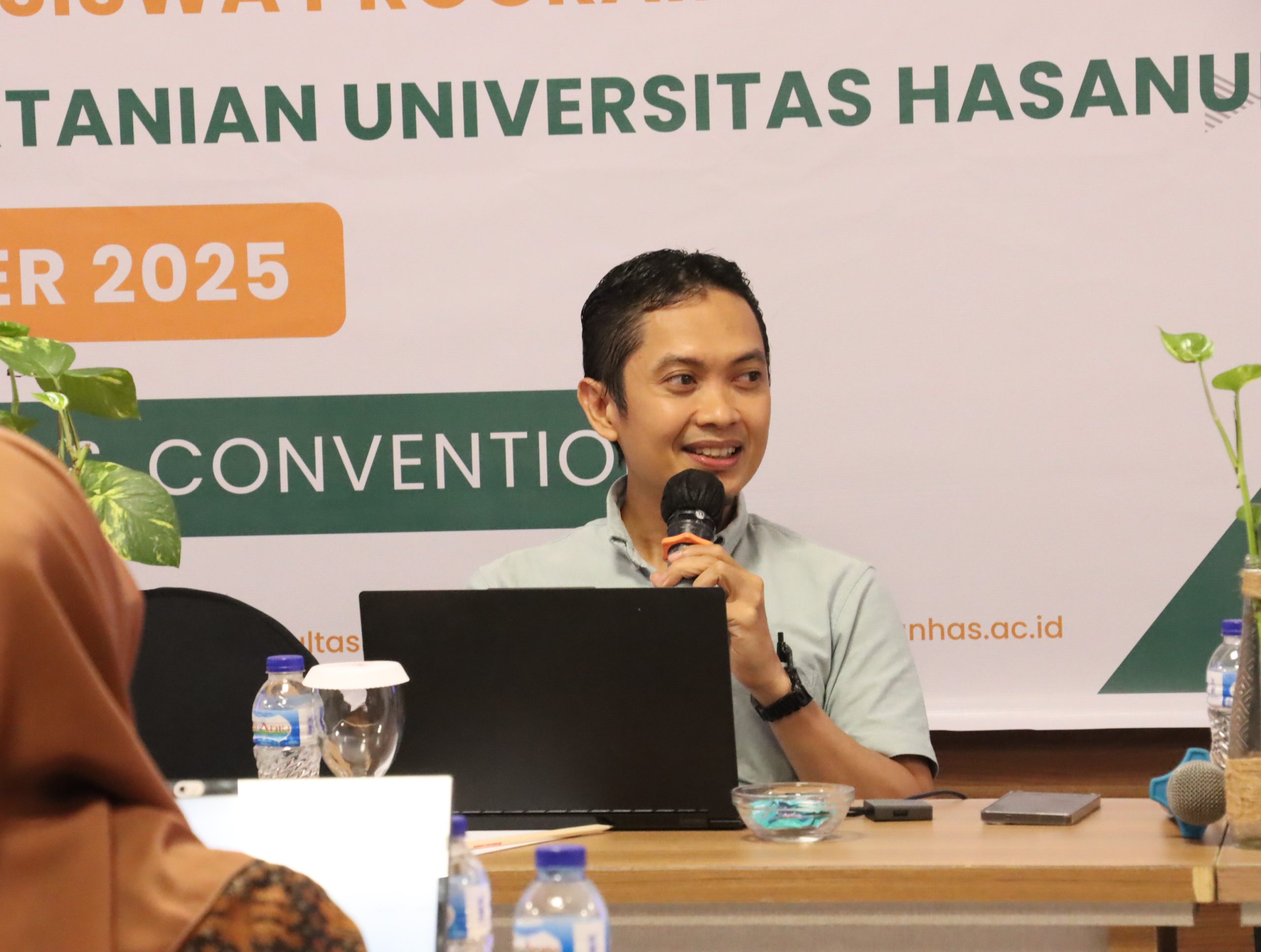
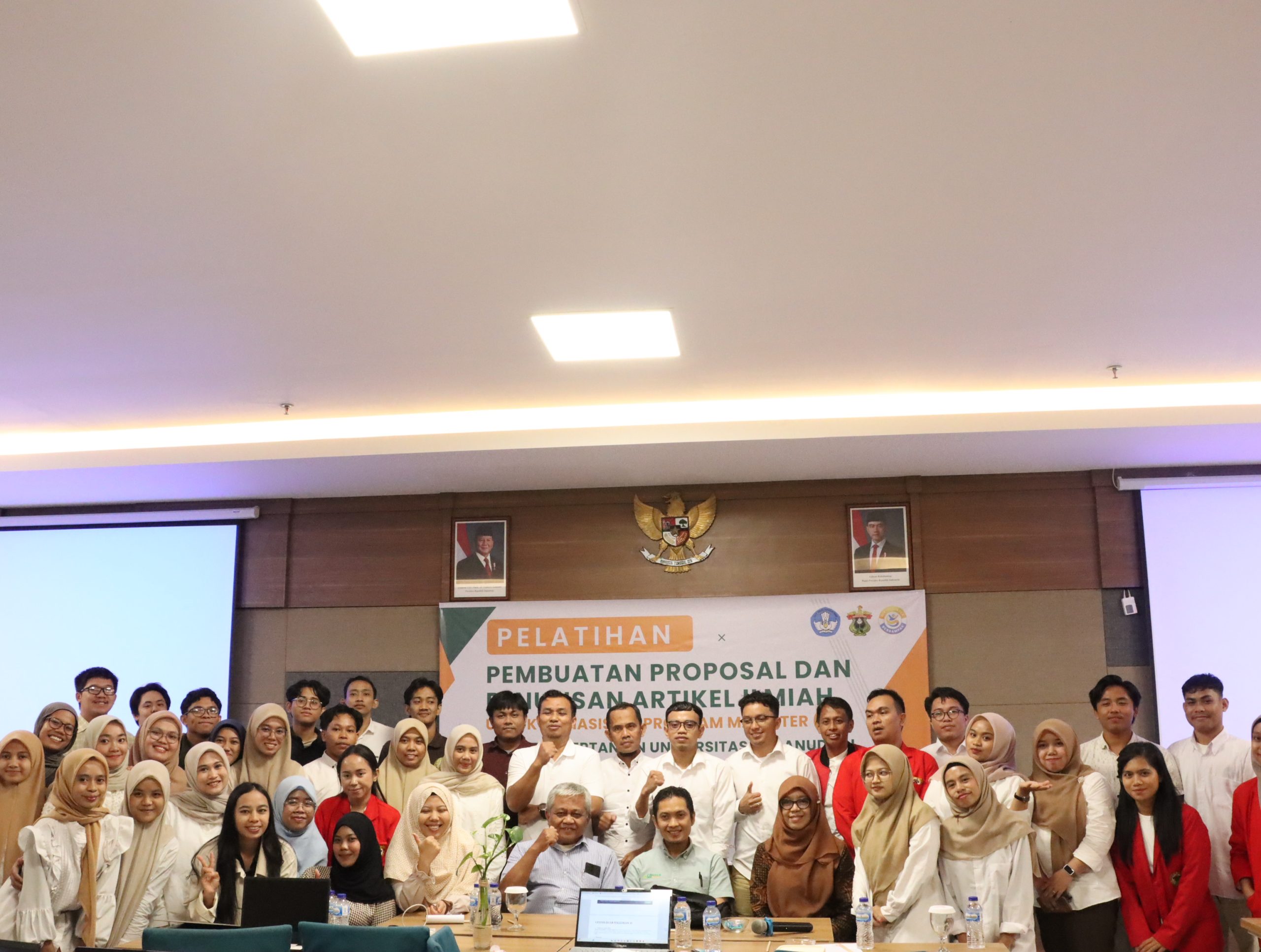
The Faculty of Agriculture, Hasanuddin University, held a Proposal Writing and Scientific Article Writing Training for Master’s Program (S2) students on Saturday, November 8, 2025, at the Unhas Hotel & Convention Center. This training is intended as a faculty effort to improve students’ academic skills, particularly in designing high-quality research and producing scientific publications that meet both national and international standards.
The training was officially opened by the Dean of the Faculty of Agriculture, Unhas, Prof. Dr. Ir. Rismaneswati, S.P., M.P. In her remarks, she stated that the ability to write research proposals and scientific articles is a must for postgraduate students. She believes that the quality of research will significantly improve, so she hopes that today’s activities can be carried out well.
“Many articles have been published on various research platforms, but not all are of equal quality. I am confident that after today’s activity, the quality of your students’ research will be sufficient to compete with international articles,” she said.
On the same occasion, the Vice Dean for Academic and Student Affairs, Dr. Nurfaida, S.P., M.Si., also presented the Master’s Degree Academic Regulations regarding Journals/Publications. She stated that article writing must align with knowledge of academic instruments.
The activity presented speakers including Prof. Dr. Halmar Halide, M.Sc with the topic of Paper Submission and Response Preparation for International Journals Using AI Assistant and Prof. Ir. Andi Dirpan, STP., M.Si., Ph.D with the topic of Smarter Writing – AI Tool for Scholarly Writing.
Master’s students demonstrated enthusiasm in each session, which included a combination of presentations, interactive discussions, and examples of applicable scientific articles. The material provided was very helpful, especially in understanding common and fatal errors often encountered in writing proposals and scientific articles
| M | T | W | T | F | S | S |
|---|---|---|---|---|---|---|
| 1 | 2 | 3 | 4 | 5 | 6 | 7 |
| 8 | 9 | 10 | 11 | 12 | 13 | 14 |
| 15 | 16 | 17 | 18 | 19 | 20 | 21 |
| 22 | 23 | 24 | 25 | 26 | 27 | 28 |
| 29 | 30 | 31 | ||||